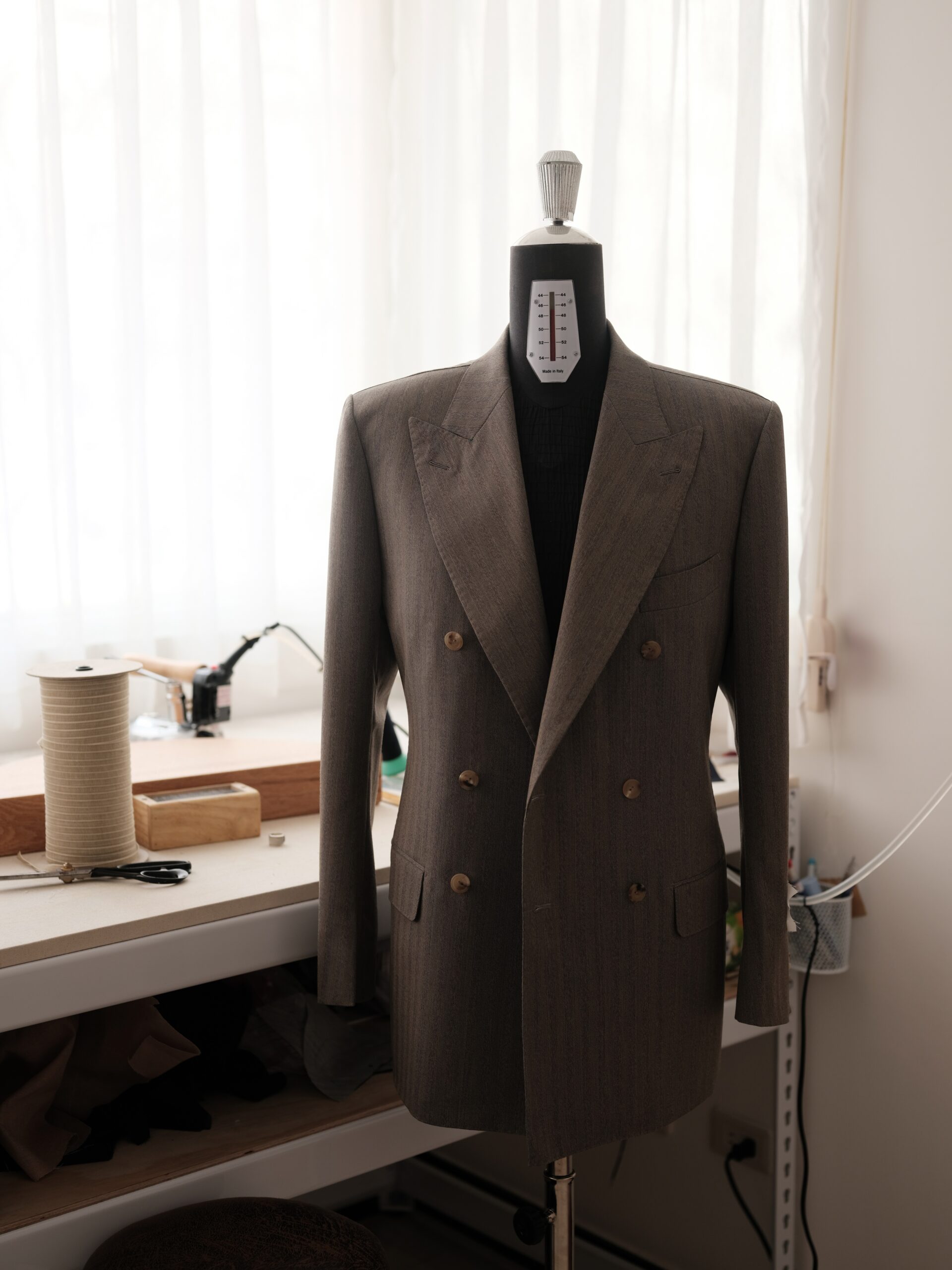
如果要我選一個裁縫數百年來都沒怎麼講清楚的觀念,那一定是 straightening & crookening,我希望這次能用一篇文章的篇幅,就讓各位理解這術語代表的是什麼意思。
我手邊剛好有一本 1928 年出版、由 A. A. Whife 編撰的裁縫教科書《The Modern Tailor, Outfitter and Clothier》,它把 straightening & crookening 講得相當清楚:
“…the breast is round, but the centre of breast is not. If the right length of cloth be given up the centre of front to shoulder, there must be some superfluous cloth either near the scye or at the front edge; and one must decide where this is to go. A straight cut forces the cloth towards the scye; a crooked one pushes it towards the front. If the latter, then it may be removed by means of vees or manipulation.”
胸部是圓的,但胸部的中心不在最凸處。若從前中心上到肩膀給予正確的衣長,必然會在袖籠附近或前中心處留下一些多餘的布;你必須決定這塊布往哪裡去。straight cut 把布趕向袖籠;crooked cut 把布趕向前中心。若是後者,多餘的布可用 vees(褶子)或 manipulation(歸拔)收掉。
這是整本書給 straight / crooked 最具操作性的定義:差別就在你把胸前那塊多餘的布,趕往袖籠,還是趕往前中心。
那具體怎麼操作?
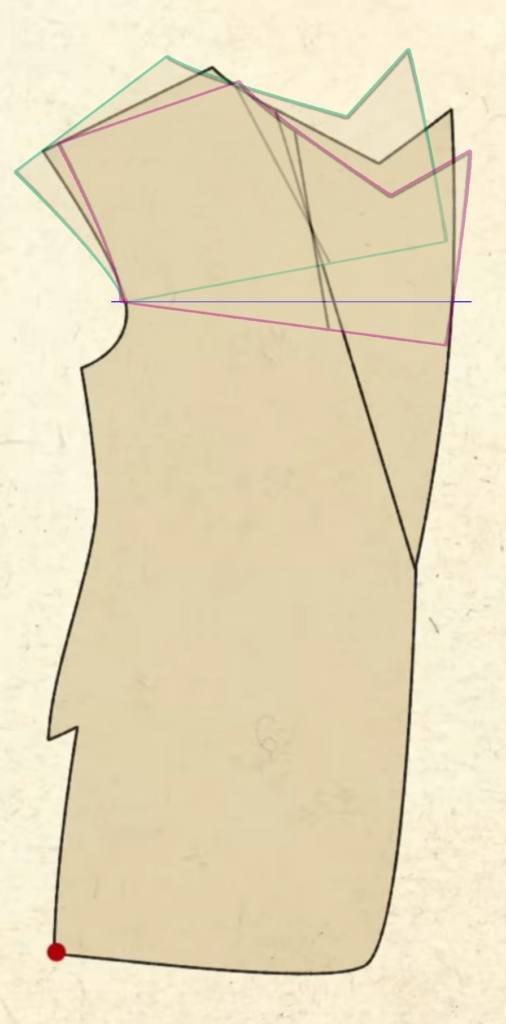
“In forwarding or receding, the arc should be pivoted from front of scye; therefore a straighter cut is slightly depressed and a crooked one raised.”
在前移或後退時,弧線應以前袖籠為支點旋轉;因此 straighter cut 會略微壓低(depressed),crooked cut 會略微抬高(raised)。
注意這個操作的結果:側頸點的位置,同時發生了水平與垂直的位移——它不是單純地往前或往後平移。
那如果真的只做單純的水平位移呢?教科書怎麼稱呼?
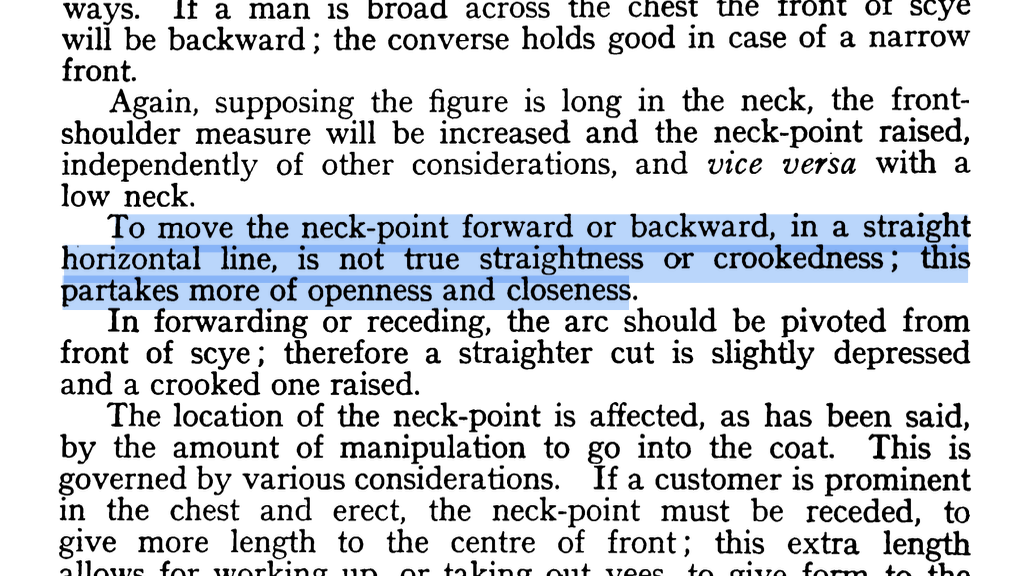
“To move the neck-point forward or backward, in a straight horizontal line, is not true straightness or crookedness; this partakes more of openness and closeness.”
把頸點沿一條水平直線往前或往後移,並不是真正的 straightness 或 crookedness;那更接近 openness 與 closeness。
這裡我提一個大膽的假設:上海派(紅幫)裁縫「開門」這個詞,搞不好就是從這裡來的。因為「開門」指的正好是側頸點的水平位置,跟 openness / closeness 的語義高度吻合。
但你大概記得,我先前說過「straightening & crookening 等同於開門」。難道我之前寫錯了?
先別急,我們看 Steed Bespoke Tailor 的掌門人 Edwin DeBoise 在影片裡怎麼解釋:
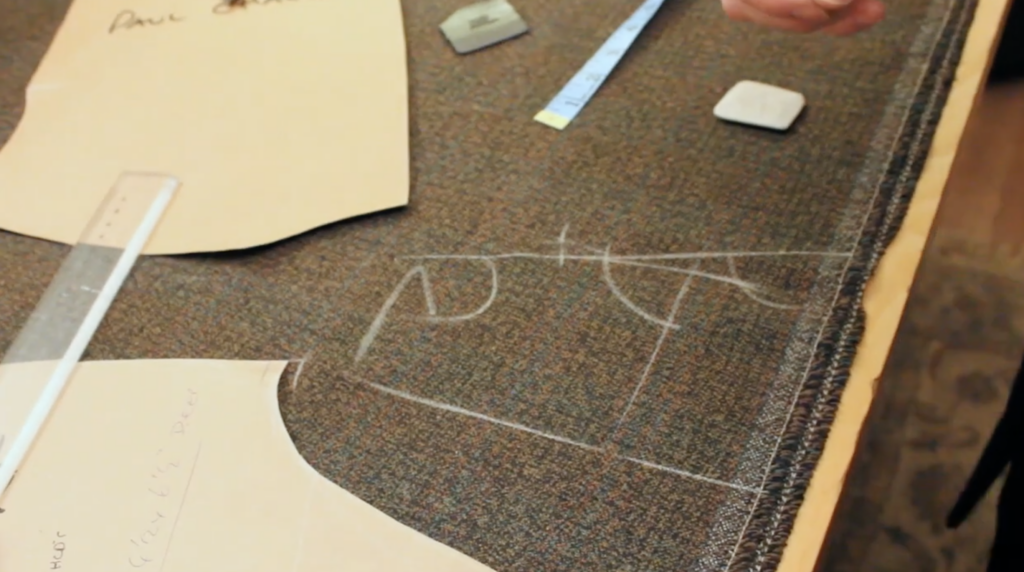
“The only way you can crook or straighten a coat on the jacket pattern is to move the neck point… But the more we bring it back, because of the shoulder slope, we’re shortening the front balance. And we don’t want that… we want to keep the balance the same… so we need to pick up the jacket and go back into that point. So we keep the same, whether we’re crookening it or straightening.”
版型上要 crook 或 straighten 一件外套,唯一的辦法就是移動這裡的頸點……但我們越往後帶,因為肩線是斜的,前平衡就被縮短了。而我們不要這樣……我們要讓平衡維持不變……所以我們得在外套上把那塊量補回來,再回到頸點。這樣不論 crooken 還是 straighten,我們都維持不變。
發現了嗎?DeBoise 這個做法,其實是把頸點做了「水平移動」。而按照《The Modern Tailor》的定義,這根本不算 straightening & crookening。
太奇怪了。同一個 straightening & crookening,竟然有兩種截然不同的解釋。
更有趣的是,還有第三種。
International School of Tailoring 的創辦人 Ali Reza,說法是這樣:
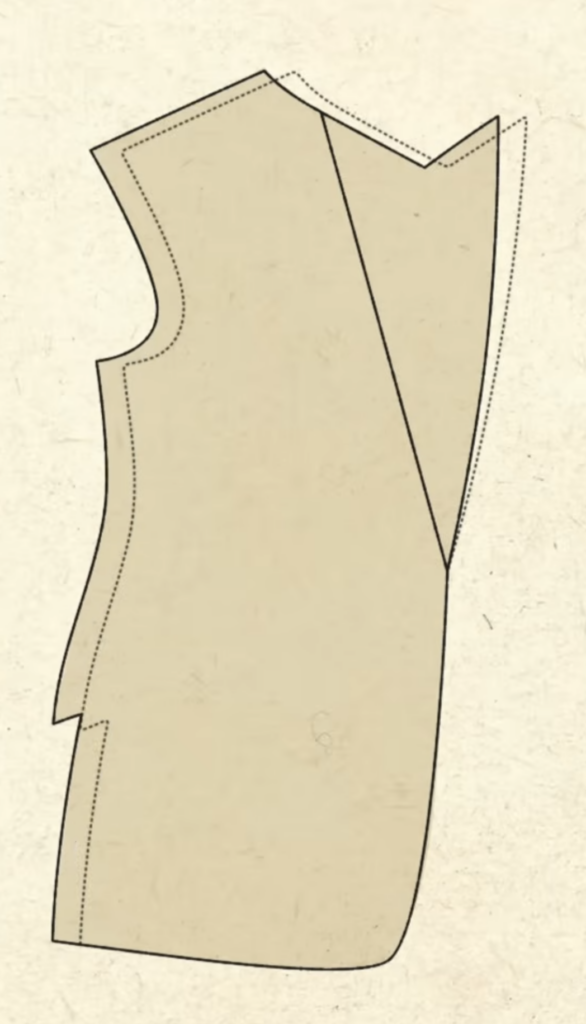
“Here we have a back panel and a front panel that are sewn together at the shoulders, but are left open on the sides. Now, if we take the front neck point and the front shoulder point, so the entire front shoulder, and we move it towards the side on a horizontal line, and we then attach it back to our back shoulder, what you see is that the entire front panel shifts towards the centre on a horizontal line. That is crookening a jacket.”
這裡有一個後片和一個前片,在肩線縫合、側邊敞開。如果我們取前領點和前肩點,也就是整條前肩,沿水平線往側邊移,然後再把它接回後肩,你會看到整個前片沿水平線往中心移。這就是 crookening 一件外套。
“I hate this term because it doesn’t imply the purpose of the alteration. What it should be called is shifting the front panel towards the centre. But why is it called crookening? When you move the front neck points towards the sides and you remark your break line, you are increasing the angle of that break line. So you’re taking a somewhat straight break line and you’re crookening it. If you do the opposite and you take the same break line and you move the neck points towards the centre, you’re straightening it.”
我討厭這個術語,因為它沒點出這個改動的目的。它應該叫「把前片往中心移」。但為什麼它叫 crookening?當你把前領點往側邊移、重新畫出你的領摺線時,你增大了那條領摺線的角度。所以你是把一條偏直的領摺線弄彎(crooken)了。反過來,把同一條領摺線、領點往中心移,你就是把它弄直(straighten)。
“The standard way is: you take your forepart, you take your front neck point and front shoulder point, and you move those two on a horizontal line towards the side by whatever amount. You also have to let out your front side by the same amount that you crooken. And you let out the entire front underarm seam by the same amount that you crooken as well.”
標準做法是:取前片,取前領點和前肩點,把這兩點沿水平線往側邊移動你要的量。你也必須把 front side(前側縫)放出跟 crooken 一樣的量,同時把整條 front underarm seam(前袖下縫)也放出同樣的量。
注意這裡的關鍵差異:Reza 的做法,等於直接把前中心線往外移(前胸寬加大)。它的優點是袖籠圈的形狀基本不變,你不必擔心「單純移動頸點與肩點會改變袖籠形狀」的問題。但缺點也很明顯——這樣改出來的衣服,三圍尺寸(包含前胸寬)都會不可避免地放大你所移動的量。而前面兩種方法,都不會動到尺寸。
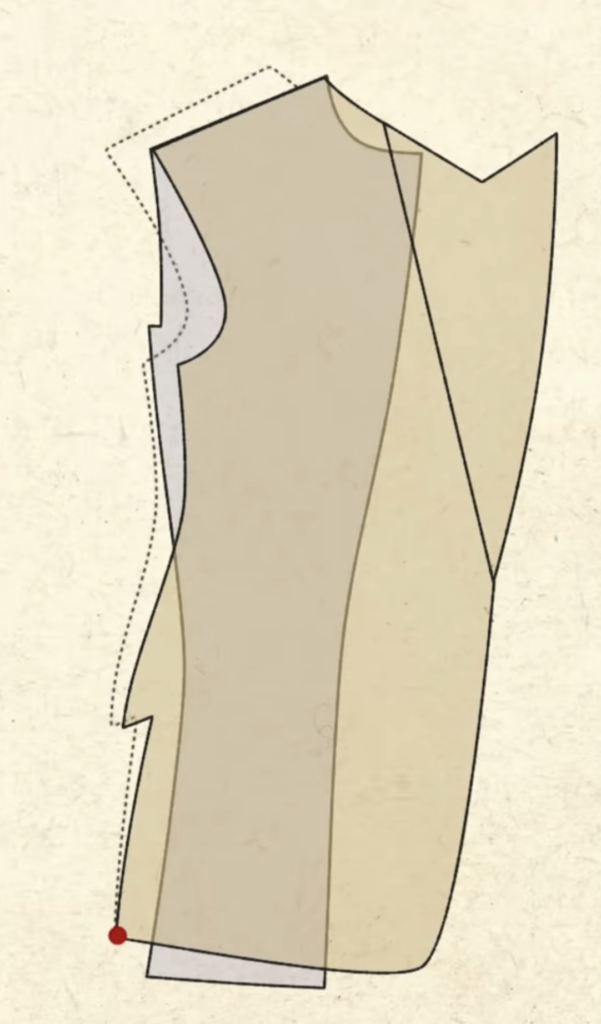
Reza 還補充了一點:如果照第二種做法、只單純水平移動頸點,會發生什麼事?
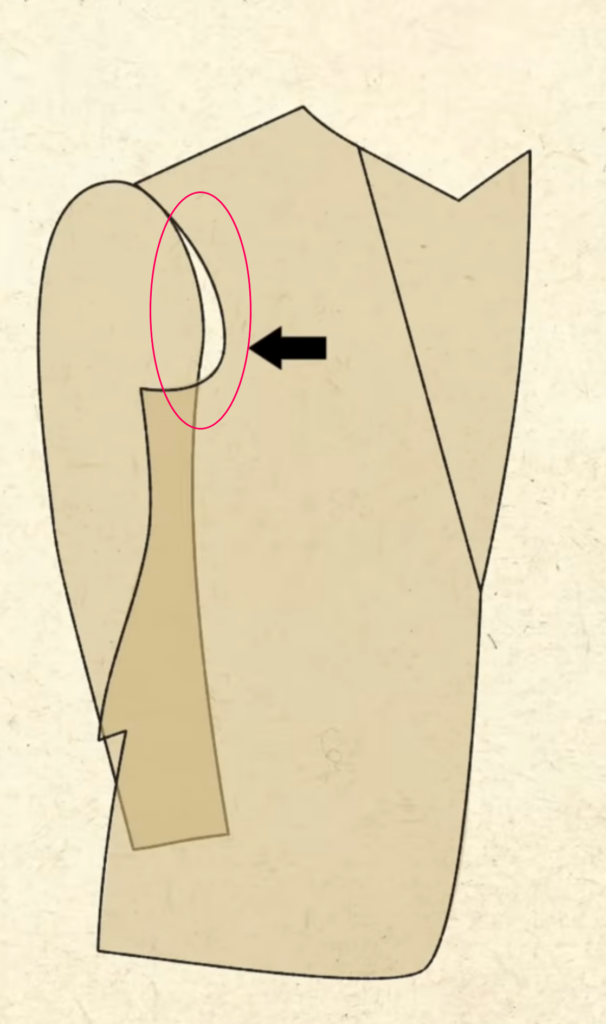
“Now, if this moves over and you haven’t let out your front side, you’ll end up with a gap, because this shifts over but there’s nothing here to fill that up, and that’s not good. If this shifts over and you haven’t let out your underarm seam, then this stays right where it is, and it can’t move over, and so you end up with a forepart that is swinging away, because the top is moving to the front but the bottom isn’t, and so it ends up like a diagonal line.”
如果前片移過去、你卻沒放 front side,你會得到一個 gap,因為它移過去了、但這裡(袖籠)沒有布來填,這樣不好。如果前片移過去、你卻沒放 underarm seam,那這部分就卡在原位、移不過去,於是你會得到一個往外盪開的前片——上面往前移了、下面卻沒有,結果前緣斜成一條對角線。
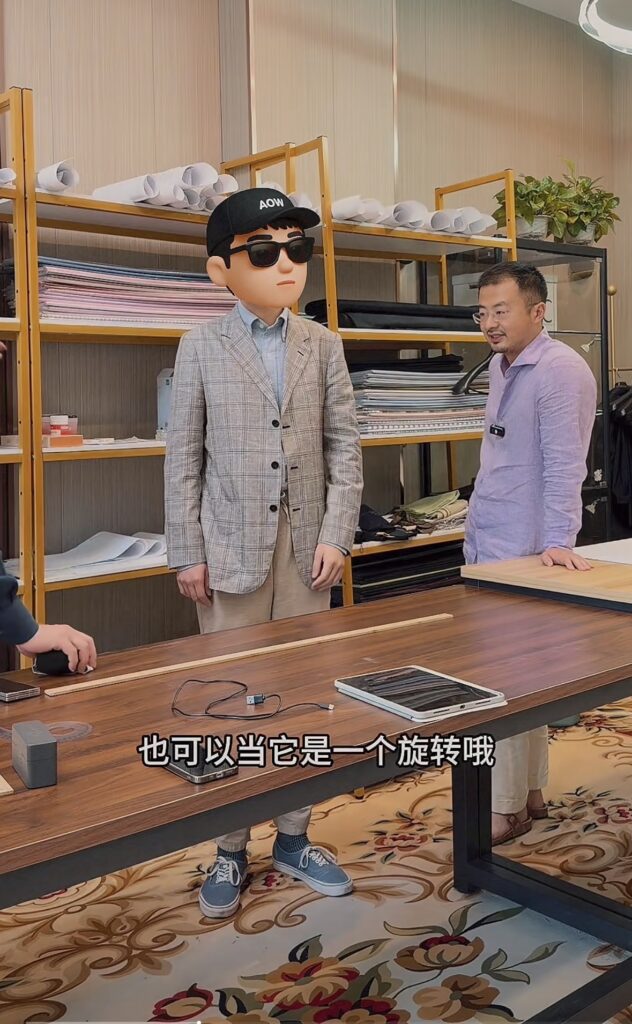
說白了,前片因此旋轉了。這也正是前上海 W.W. Chan 的 cutter 章師傅那句「開門可以是一個平移,也可以是一個旋轉運動」的由來。
所以我的結論是:裁縫這行不是愛搞神秘,而是這個術語所指涉的內涵,在不同店家、不同流派之間,本質上就是不同的。你學到的跟我學到的,用的是同一個詞,操作方式卻不一樣——誰能決定誰對誰錯?
寫完這篇,但願能替各位解開這個裁縫百年難題。往後跟人聊起 straightening & crookening,至少不會被看破手腳,落得一個「識少少扮代表」的稱號。
上次得到這個稱號的大聰明,居然到現在還是搞不明白這個原理。我只能說幹這行還是需要一點天分的,靠著到處噴屎吸粉割韭菜金價母湯啦。
Key Takeaways
- straightening & crookening 是一個長久以來未解釋清楚的裁縫術語,主要與衣物的布料安排有關。
- 《The Modern Tailor》清楚定義這兩者差別,重點在於布料移動方向是否改變側頸點位置。
- 目前有三種解釋方式:包括水平移頸點的 DeBoise 方法,以及 Ali Reza 的前中心線外移。
- 不同裁縫流派對於 straightening & crookening 的理解有所不同,無法單純以對錯來判斷。
- 希望透過這篇文章,讀者能對 straightening & crookening 有更深入的了解,避免誤解。
你的想法